How to tell if a crystal bracelet is real or fake
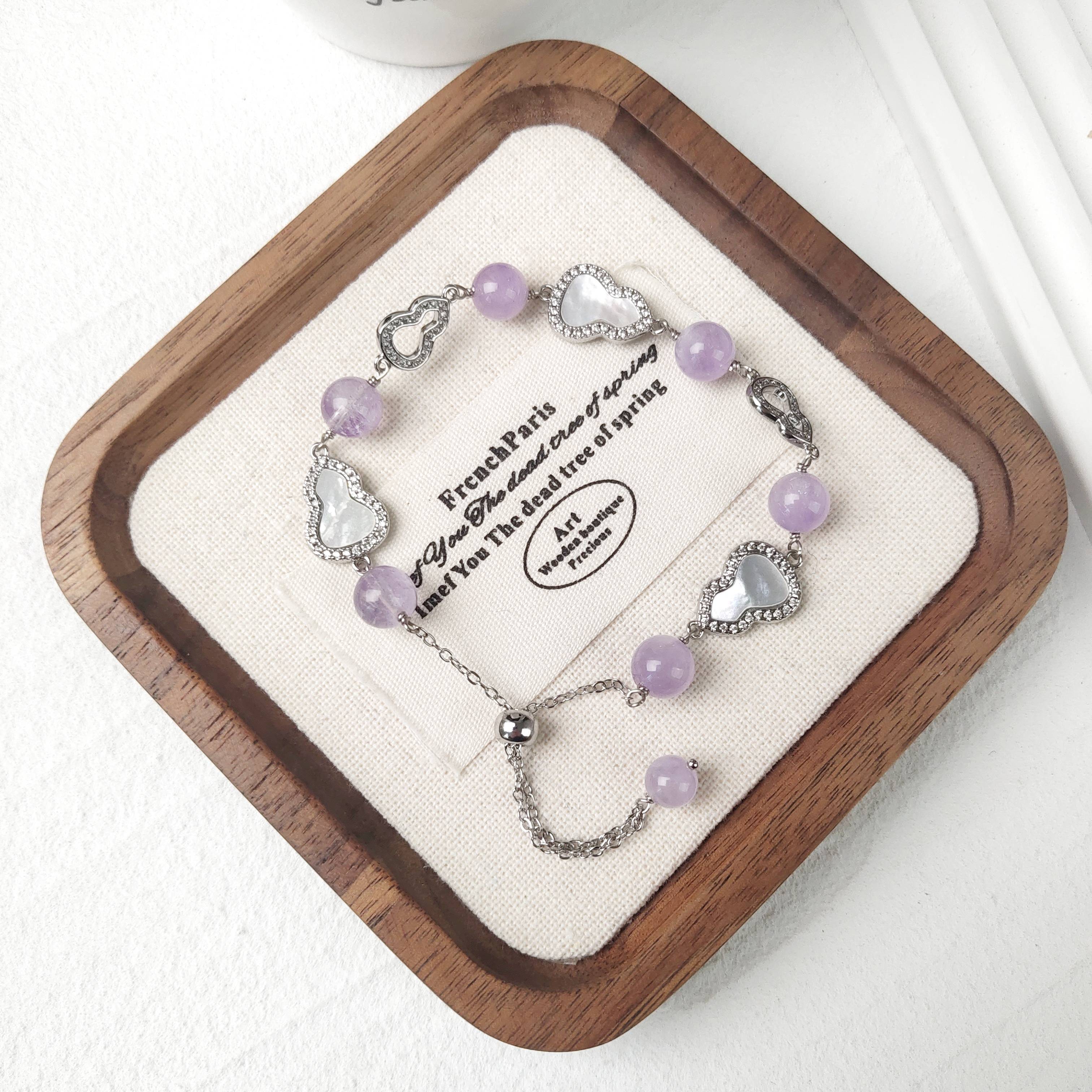
It is the first question we hear, and it is a fair one: most fakes are glass, plastic or resin wearing a crystal's name. Natural stone behaves differently from all three, and you can feel most of the difference with your hands and eyes. Here are the checks in the order we use them. One honest warning up front: home checks screen out most fakes, but none of them is proof on its own.
Touch first. A quartz-family stone — amethyst, rose quartz, citrine, clear quartz — feels cool against the skin and warms up slowly. Glass warms noticeably faster, and plastic feels warm and light almost at once. Then pick the bracelet up: natural stone is dense, and a beaded bracelet should feel heavier than it looks. A strand that feels hollow or toy-like is telling you something.
Now look inside the beads, against the light. Natural stone grew slowly, and it shows: tiny inclusions, fine internal fractures, clouds and uneven colour are normal — perfect clarity in every bead is not. The real giveaway is bubbles. Round air bubbles trapped inside a bead mean glass; natural crystal does not trap round bubbles. On resin pieces, look for a faint mould line around the bead's equator.
Colour is the next check. Dyed stone pools its colour in the cracks and around the drill hole, so the colour looks painted into the fractures. Natural banding, like agate's, is irregular — it wanders, thickens and thins. A strand where every bead is the identical neon shade is a strand to walk away from.
Hardness settles a lot of arguments. Quartz sits at Mohs 7, so a steel file or knife point will not scratch it; glass scratches more easily and plastic dents. Do not gouge a piece you love — if you test, use one inconspicuous bead, lightly. And apply the price check: if a bracelet sold as natural stone costs less than the rough stone itself would, the arithmetic is the answer.
The only check that truly settles it is a lab. That is why our sample pieces are third-party lab tested, with the certificates published on this site — and why the most useful question you can ask any seller, including us, is: what is it made of, and how do you know? A seller who can answer plainly is worth more than any single home test.
Last updated 9 November 2026